Urolithin A and fisetin are two natural compounds that have attracted serious scientific attention for their potential roles in healthy aging. Both are found in or derived from plant foods, and both appear to intervene in biological processes linked to how cells age. But they work through distinct mechanisms — and understanding that distinction matters if you are trying to make sense of the research.
Urolithin A activates a cellular recycling process called mitophagy, which removes damaged mitochondria before they can accumulate and impair cell function. Fisetin, a flavonoid found in strawberries and other fruits, appears to act as a senolytic — a compound that helps the body clear out senescent cells, sometimes called ‘zombie cells,’ that have stopped dividing but continue secreting inflammatory signals. This article summarizes what the current evidence shows for each compound, where the evidence is stronger, and where significant gaps remain.
Key Takeaways
- Urolithin A and fisetin work through distinct mechanisms — urolithin A activates mitophagy to clear damaged mitochondria, while fisetin acts as a senolytic to help eliminate senescent cells.
- Urolithin A has more advanced human clinical evidence, including a randomized trial showing improved muscle strength and exercise performance in middle-aged adults [1].
- Fisetin’s strongest data comes from animal models, but recent studies show early promise for reducing senescence markers in aging human skeletal muscle [2].
- The two compounds are not competing alternatives — they target different cellular problems and could theoretically be complementary, though no human combination trials exist.
- Neither compound has been proven to prevent disease or extend human lifespan; evidence gaps remain substantial for both, particularly on long-term clinical outcomes.
Different Mechanisms: Mitophagy vs. Senolysis
To compare urolithin A and fisetin fairly, it helps to understand what each one is actually doing at the cellular level. Urolithin A is a postbiotic — a compound produced when gut bacteria metabolize ellagitannins, polyphenols found in pomegranates, walnuts, and some berries. Its primary studied action is the activation of mitophagy: the selective autophagy pathway through which cells identify and break down dysfunctional mitochondria [3]. Because mitochondrial dysfunction is a recognized hallmark of aging and many chronic diseases, restoring this quality-control process is considered a meaningful intervention target [4].
Fisetin’s primary mechanism is different. It belongs to a class of compounds called senolytics — agents that selectively eliminate senescent cells [5]. Cellular senescence is a state in which a cell permanently exits the cell cycle, often in response to stress or DNA damage. While senescence has protective roles, the accumulation of senescent cells with age contributes to chronic low-grade inflammation and tissue dysfunction [6]. Fisetin has been shown in preclinical work to reduce the burden of these cells and extend healthy lifespan in animal models [7]. These are complementary, not competing, pathways — both relate to cellular quality control, just at different levels.

Human Evidence for Urolithin A
Urolithin A has been through several human clinical trials, which puts it ahead of most longevity compounds in terms of evidence rigor. An early Phase 1 trial in healthy older adults found that oral urolithin A supplementation was well tolerated and produced a molecular signature consistent with improved mitochondrial and cellular health, including changes in plasma and skeletal muscle gene expression linked to mitochondrial biogenesis [8].
A randomized controlled trial in middle-aged adults extended those findings into functional outcomes. Participants who supplemented with urolithin A showed improvements in muscle strength and exercise performance, along with favorable changes in biomarkers associated with mitochondrial health, compared to placebo [1]. A 2024 systematic review of human studies concluded that the available evidence supports meaningful biological effects in humans, while noting that large-scale trials on hard clinical endpoints are still needed [9].
Human Evidence for Fisetin
Fisetin’s evidence base in humans is earlier-stage than urolithin A’s. Most of the compelling data comes from animal models. The influential 2018 study by Yousefzadeh et al. demonstrated that fisetin reduced the senescent cell burden in aged mice and extended both median and maximum lifespan in that model [7]. This was a significant finding in the senolytic field, but mouse data does not translate automatically to humans.
More recent work has begun to move toward human-relevant evidence. A 2025 study examined intermittent fisetin supplementation in the context of skeletal muscle aging and found improvements in physical function and reductions in markers of cellular senescence in muscle tissue, comparing results to genetic and synthetic senolytic approaches [2]. Separately, a 2025 study showed that clearing senescent endothelial cells alleviated metabolic dysfunction in obese mice, consistent with fisetin’s proposed mechanism [10]. A comprehensive 2024 review summarized the accumulating evidence for fisetin across multiple age-related conditions, while acknowledging that robust human trials remain limited [11].

Muscle Health and Physical Function
Both compounds have been studied in the context of muscle health, though from different angles. Urolithin A’s RCT data in middle-aged adults directly measured functional endpoints — grip strength and exercise performance improved in the treatment group compared to placebo [1]. The proposed mechanism is that by clearing dysfunctional mitochondria through mitophagy, urolithin A allows muscle cells to maintain higher-quality energy production. Skeletal muscle mitochondrial function declines with age, and restoring that function has plausible implications for strength and endurance.
Fisetin’s muscle-relevant data is newer. The 2025 intermittent supplementation study found that fisetin reduced cellular senescence markers in aging skeletal muscle and improved physical function measures, drawing an explicit comparison to genetic models of senescent cell clearance [2]. This is encouraging, but the study design and scale differ from the urolithin A RCT. If you are primarily interested in muscle function and physical performance, urolithin A currently has the more direct human trial evidence.
Brain Health and Cognitive Function
One area where urolithin A has seen recent clinical research is cognitive function. A 2024 study in Alzheimer’s & Dementia investigated urolithin A in patients with Alzheimer’s disease and found improvements in cognition alongside restoration of mitophagy and lysosomal function [12]. Mitophagy impairment is thought to contribute to the accumulation of damaged proteins and organelles in neurons, which are features of Alzheimer’s pathology, so the mechanistic link is biologically coherent.
Fisetin has shown neuroprotective properties in preclinical models, and its broader senotherapeutic profile — reducing both senescent cell burden and inflammatory signaling — is considered potentially relevant to brain aging. The 2024 review of fisetin across age-related diseases covers neurological applications [11]. However, direct clinical evidence of fisetin’s effects on human cognitive outcomes has not yet been established at the level seen in the urolithin A Alzheimer’s study.
How to Think About These Two Compounds
Because urolithin A and fisetin target different hallmarks of aging — mitochondrial quality control versus senescent cell accumulation — they are not direct competitors. In theory, they address distinct biological problems that both increase with age. Some researchers and longevity-focused clinicians have considered whether compounds addressing multiple aging mechanisms might be complementary, though no clinical trials have tested urolithin A and fisetin in combination.
From an evidence standpoint, urolithin A is further along in human clinical validation, with randomized controlled trial data on functional outcomes and a Phase 1 safety profile in older adults [8] [1]. Fisetin has compelling preclinical data and early evidence in aging muscle [2], but rigorous human trials confirming senescent cell clearance as a measured clinical endpoint in people are still in progress. The honest framing is that both compounds show biological promise consistent with their proposed mechanisms, but neither has been proven to extend human lifespan or reliably prevent any specific disease.
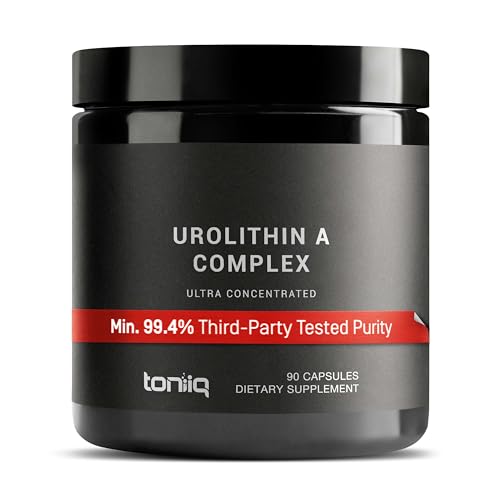
🛒 Where to Buy Urolithin A
- Timeline Mitopure SoftgelsClinically studied
softgels, 500 mg/day — The clinically studied form (Amazentis); used in the human trials. - Pure Encapsulations Renual
caplique capsules, 250 mg Mitopure Urolithin A/serving (with resveratrol + CoQ10) — established clinical-supplement brand, third-party tested. - ProHealth Longevity Urolithin A
capsules, 500 mg — Longevity-focused brand, often higher dose. - Double Wood Urolithin A
capsules, 250-500 mg — Budget-friendly, widely available, COA on request.
As an Amazon Associate we earn from qualifying purchases. Prices and availability vary; verify dose and third-party testing before buying.

A Note on the Evidence
The research on both urolithin A and fisetin is promising but incomplete — most fisetin data comes from animal models, and human trials for both compounds are still limited in size and duration. Neither compound should be considered a treatment for any disease, and individuals with chronic health conditions, those taking prescription medications, or older adults with complex medical needs should consult a qualified healthcare provider before beginning supplementation.
Frequently Asked Questions
What is the main difference between urolithin A and fisetin?
Urolithin A primarily activates mitophagy — the cellular process that removes dysfunctional mitochondria — while fisetin acts primarily as a senolytic, helping to eliminate senescent ‘zombie’ cells that accumulate with age [4] [7]. Both relate to cellular quality control but operate at different levels of cell biology.
Which compound has more human trial evidence?
Urolithin A has the stronger human evidence base at this time. It has been through a Phase 1 safety trial and a randomized controlled trial showing improvements in muscle strength and mitochondrial biomarkers in middle-aged adults [1] [8]. Fisetin’s most compelling data is still predominantly from animal models, with early human-relevant studies only recently emerging [2].
Can urolithin A and fisetin be taken together?
Because they target distinct pathways — mitochondrial quality control versus senescent cell clearance — they are not redundant, and some researchers consider them potentially complementary. However, no clinical trials have tested this combination in humans, so there is no direct evidence on the safety or efficacy of taking both together. Anyone considering both should discuss it with a healthcare provider.
Does fisetin actually clear senescent cells in humans?
Animal model evidence, including a landmark mouse study, showed that fisetin reduces the burden of senescent cells and extended healthspan [7]. A 2025 study found that intermittent fisetin supplementation reduced senescence markers in aging human skeletal muscle [2], which is an encouraging signal. However, large-scale human trials confirming meaningful senescent cell clearance as a clinical endpoint in people are not yet completed.
Is urolithin A safe to take?
A Phase 1 clinical trial in healthy older adults found urolithin A to be safe and well tolerated, producing a molecular signature consistent with improved cellular health without adverse effects [8]. A 2024 systematic review also noted a favorable safety profile across the available human studies [9]. As with any supplement, individual responses can vary, and people with medical conditions or taking medications should consult a healthcare provider before use.
Does urolithin A help with brain health?
A 2024 clinical study found that urolithin A improved cognition and restored mitophagy and lysosomal function in patients with Alzheimer’s disease [12]. This is a notable early finding with a plausible mechanistic basis. Research into urolithin A’s effects on cognitive aging in people without Alzheimer’s is ongoing, and it is too early to draw broad conclusions about its role in general brain health.
References
- Singh A et al. Urolithin A improves muscle strength, exercise performance, and biomarkers of mitochondrial health in a randomized trial in middle-aged adults. Cell reports. Medicine (2022). PMID 35584623
- Murray KO et al. Intermittent Supplementation With Fisetin Improves Physical Function and Decreases Cellular Senescence in Skeletal Muscle With Aging: A Comparison to Genetic Clearance of Senescent Cells and Synthetic Senolytic Approaches. Aging cell (2025). PMID 40437670
- Ryu D et al. Urolithin A induces mitophagy and prolongs lifespan in C. elegans and increases muscle function in rodents. Nature medicine (2016). PMID 27400265
- D'Amico D et al. Impact of the Natural Compound Urolithin A on Health, Disease, and Aging. Trends in molecular medicine (2021). PMID 34030963
- Kirkland JL et al. Senolytic drugs: from discovery to translation. Journal of internal medicine (2020). PMID 32686219
- Kirkland JL et al. Cellular Senescence: A Translational Perspective. EBioMedicine (2017). PMID 28416161
- Yousefzadeh MJ et al. Fisetin is a senotherapeutic that extends health and lifespan. EBioMedicine (2018). PMID 30279143
- Andreux PA et al. The mitophagy activator urolithin A is safe and induces a molecular signature of improved mitochondrial and cellular health in humans. Nature metabolism (2019). PMID 32694802
- Kuerec AH et al. Targeting aging with urolithin A in humans: A systematic review. Ageing research reviews (2024). PMID 39002645
- Suda M et al. Endothelial senescent-cell-specific clearance alleviates metabolic dysfunction in obese mice. Cell metabolism (2025). PMID 41270738
- Tavenier J et al. Fisetin as a senotherapeutic agent: Evidence and perspectives for age-related diseases. Mechanisms of ageing and development (2024). PMID 39384074
- Hou Y et al. Urolithin A improves Alzheimer's disease cognition and restores mitophagy and lysosomal functions. Alzheimer's & dementia : the journal of the Alzheimer's Association (2024). PMID 38753870
These statements have not been evaluated by the Food and Drug Administration. This information is not intended to diagnose, treat, cure, or prevent any disease. Content is for informational purposes only and is not medical advice; consult a qualified healthcare provider before starting any supplement. As an Amazon Associate we earn from qualifying purchases.