Autophagy—the cellular process by which damaged components are broken down and recycled—has become one of the more studied targets in longevity research. Two compounds have attracted particular interest as dietary autophagy inducers: urolithin A, a postbiotic produced when gut bacteria metabolize certain polyphenols, and spermidine, a naturally occurring polyamine found in foods like wheat germ, mushrooms, and aged cheese. Both are available as supplements and both have a growing body of peer-reviewed research behind them, though their mechanisms and the tissues where evidence is strongest differ in meaningful ways.
This article compares urolithin A and spermidine head-to-head on mechanism, research depth, and practical considerations. The goal is to give you an honest picture of what the science currently supports—not to declare a winner, but to help you understand what each compound actually does and where the evidence is solid versus preliminary.
Key Takeaways
- Urolithin A specifically activates mitophagy—the selective clearance of damaged mitochondria—via the PINK1/Parkin pathway, which has been demonstrated in human clinical trials [1][2].
- Spermidine induces broader autophagy primarily by inhibiting the acetyltransferase EP300, and appears to be a required mediator of fasting-induced autophagy in animal research [3][4].
- Urolithin A currently has more interventional human trial data, particularly for muscle and mitochondrial health outcomes.
- Spermidine has a longer preclinical track record across multiple organisms and organ systems, but human supplementation trials with hard clinical endpoints are still limited.
- The two compounds work through distinct mechanisms and are not interchangeable; their research profiles suggest different primary tissue targets, with urolithin A stronger in muscle and spermidine more studied in broad longevity and brain contexts at the preclinical level.
Autophagy, Mitophagy, and Why the Distinction Matters
Autophagy is a broad housekeeping process: cells engulf and degrade misfolded proteins, pathogens, and damaged organelles, then reuse the molecular building blocks. It declines with age, and that decline is associated with the accumulation of cellular debris that contributes to tissue dysfunction.
Mitophagy is a more selective form of autophagy focused specifically on clearing dysfunctional mitochondria. Because mitochondria generate the reactive oxygen species that can damage DNA and proteins, keeping the mitochondrial pool healthy matters for virtually every tissue—especially muscle, brain, and heart. Urolithin A acts primarily as a mitophagy inducer, while spermidine promotes broader autophagy through a different biochemical route. Understanding this distinction helps clarify why the two compounds tend to show up in different research contexts.
How Urolithin A Triggers Mitophagy
Urolithin A is not present in food itself; it is produced in the colon when bacteria convert ellagitannins from pomegranates, walnuts, and certain berries. Only roughly 40 percent of adults harbor the gut microbiota needed for this conversion, which is part of the rationale for supplementing with urolithin A directly. In cells, urolithin A activates the PINK1/Parkin pathway—a well-characterized quality-control system that tags damaged mitochondria with ubiquitin signals, triggering their engulfment by autophagosomes. A foundational study demonstrated that urolithin A induces mitophagy in C. elegans, extending lifespan, and also improves muscle function in rodents [5]. This landmark work established urolithin A as the first food-derived compound shown to activate mitophagy in a living organism.

The specificity of urolithin A for the mitochondrial pathway is notable. Rather than broadly suppressing protein synthesis (a mechanism associated with some lifespan-extending interventions), it appears to selectively clear the mitochondria that are most likely to leak damaging reactive oxygen species. This selective clearance is thought to explain improvements seen in muscle and neuronal tissue in subsequent research.
How Spermidine Induces Autophagy
Spermidine works through a fundamentally different biochemical route. It is a polyamine—a class of positively charged molecules involved in cell growth and gene regulation. Spermidine inhibits EP300, an acetyltransferase enzyme that normally adds acetyl groups to histones and certain cytoplasmic proteins. By inhibiting EP300, spermidine shifts chromatin toward a state that upregulates autophagy-related genes, and it also directly promotes the deacetylation of autophagy proteins including those in the Atg pathway. Research has established spermidine as a broad autophagy inducer and identified it as a geroprotective compound across multiple model organisms [6]. More recent work has clarified the mechanistic detail, showing that spermidine’s inhibition of EP300 is central to its autophagy-inducing and anti-aging effects [3].
A significant 2024 study added an important nuance: spermidine appears to be essential for fasting-induced autophagy, not merely additive to it. The research found that fasting triggers a rise in endogenous spermidine levels, and that blocking this rise suppresses the autophagy that fasting normally induces [4]. This positions spermidine not just as one autophagy activator among many, but as a mediator of a pathway the body already uses. Whether exogenous supplementation meaningfully replicates this effect in humans requires further study.

Human Clinical Evidence: Where Things Stand
Urolithin A has the more developed human clinical record of the two. A 2019 phase I trial in healthy older adults demonstrated that a single oral dose produced measurable changes in gene expression consistent with improved mitophagy and mitochondrial biogenesis, and no safety concerns were identified [1]. A subsequent randomized controlled trial in middle-aged adults found that four months of urolithin A supplementation improved muscle strength and exercise performance alongside favorable changes in blood biomarkers of mitochondrial health, compared with placebo [2]. These are relatively small, short-duration trials, but they represent a higher level of evidence than most supplements have achieved.
Human data for spermidine is growing but remains thinner in terms of interventional trials with hard endpoints. Much of what is known comes from epidemiological studies linking dietary spermidine intake to reduced mortality and from preclinical work in cell cultures and animals. Reviews have proposed that spermidine may function as an ‘autophagy vitamin’—a compound whose age-related decline contributes to cellular aging—but note that formal clinical trial evidence for supplementation is still accumulating [7]. This gap does not mean spermidine is ineffective; it reflects where the research effort has been focused.
Tissue-Specific Research: Muscle, Brain, and Beyond
For muscle health, urolithin A has the more targeted evidence base. Beyond the general population trial [2], research in a model of muscular dystrophy found that urolithin A improved muscle function by inducing mitophagy in a disease setting where mitochondrial dysfunction plays a central role [8]. These findings suggest a mechanism relevant to both age-related muscle decline and pathological muscle conditions, though clinical translation in disease populations awaits larger trials.
For brain aging, both compounds have preclinical signals. Urolithin A restored mitophagy and lysosomal function in an Alzheimer’s disease model, improving cognitive performance [9]. Spermidine supplementation delayed brain aging in a mouse model by inducing autophagy, with reductions in markers of neurodegeneration [10]. Neither compound has completed a definitive human trial in a neurological population, so these findings are hypothesis-generating rather than confirmatory.

Spermidine has also shown activity in lung tissue in a mouse model of fibrosis, where autophagy induction appeared to reduce cell death and tissue scarring [11]. Urolithin A has attracted interest in cancer biology; one study found it could activate TFEB-mediated mitophagy in tumor-associated macrophages, which inhibited breast cancer progression in preclinical models [12]. Both of these are early-stage findings and should not be extrapolated to clinical conclusions.
Practical Differences: Sources, Bioavailability, and Dosing
Urolithin A’s main practical challenge is bioavailability from food: even a high-ellagitannin diet will not produce meaningful urolithin A levels in the roughly 60 percent of adults whose gut microbiota lacks the necessary bacteria. Purified urolithin A supplements bypass this conversion step, and the clinical trials cited here used oral supplement formulations at doses ranging from 500 mg to 2000 mg daily. This makes the supplement route more predictable for those who want the researched compound.
Spermidine is present in many common foods—wheat germ, mature cheeses, soybeans, mushrooms—and baseline dietary intake varies considerably. Supplements typically deliver spermidine extracted from wheat germ. Because spermidine is a polyamine and is produced endogenously, the body’s response to exogenous supplementation may differ depending on age, diet, and metabolic state. Levels of endogenous spermidine naturally decline with age, which has been proposed as one factor in the age-related decline of autophagy, though whether supplementation fully offsets this decline is not established in humans.
🛒 Where to Buy Urolithin A
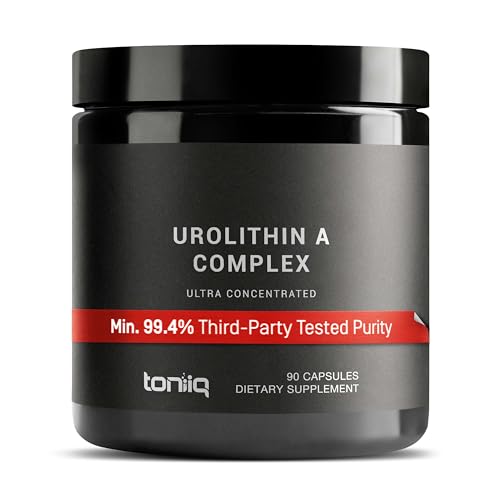
- Timeline Mitopure SoftgelsClinically studied
softgels, 500 mg/day — The clinically studied form (Amazentis); used in the human trials. - Pure Encapsulations Renual
caplique capsules, 250 mg Mitopure Urolithin A/serving (with resveratrol + CoQ10) — established clinical-supplement brand, third-party tested. - ProHealth Longevity Urolithin A
capsules, 500 mg — Longevity-focused brand, often higher dose. - Double Wood Urolithin A
capsules, 250-500 mg — Budget-friendly, widely available, COA on request.
As an Amazon Associate we earn from qualifying purchases. Prices and availability vary; verify dose and third-party testing before buying.
A Note on the Evidence
The studies cited here range from cell cultures and animal models to small human trials; none are large enough to establish definitive clinical recommendations. Neither urolithin A nor spermidine is a treatment for any disease, and this article does not constitute medical advice. If you have a diagnosed condition, are pregnant, or take medications, consult a qualified healthcare provider before adding either supplement.
Frequently Asked Questions
Do urolithin A and spermidine work through the same mechanism?
No. Urolithin A activates the PINK1/Parkin pathway to selectively remove damaged mitochondria—a process called mitophagy [5]. Spermidine inhibits the acetyltransferase EP300 to broadly upregulate autophagy-related gene expression and protein activity [3]. Both result in greater autophagy, but the upstream pathways are different.
Is there human evidence that urolithin A actually improves physical performance?
Yes, from a randomized controlled trial. Middle-aged adults taking urolithin A for four months showed improvements in muscle strength and exercise performance alongside favorable changes in mitochondrial health biomarkers compared with placebo [2]. The trial was relatively small and short-term, so longer studies are needed.
What is spermidine's connection to fasting and longevity?
Research in animals found that spermidine is not just an optional addition to fasting-induced autophagy but is actually required for it: fasting raises endogenous spermidine levels, and blocking that rise suppresses the autophagy fasting normally triggers [4]. Earlier work established that exogenous spermidine extends lifespan in multiple model organisms by inducing autophagy [6].
Can everyone absorb urolithin A from food?
Not reliably. Urolithin A is produced in the gut when bacteria metabolize ellagitannins from foods like pomegranates and walnuts. Research suggests a substantial portion of adults lack the specific bacteria needed for this conversion, meaning dietary intake of ellagitannin-rich foods does not predictably raise urolithin A levels. Purified supplement forms bypass this conversion step.
Has urolithin A been tested in people with muscle disease?
Preclinical research in a muscular dystrophy model found that urolithin A improved muscle function by inducing mitophagy, suggesting the mitochondrial pathway plays a meaningful role in that disease context [8]. Human trials in muscle disease populations have not yet been published.
Is spermidine safe as a supplement?
Spermidine is a naturally occurring polyamine present in many foods, and dietary spermidine intake has a long history without evident harm. Review literature has described it as a candidate ‘autophagy vitamin’ based on its physiological role and epidemiological associations [7]. However, formal long-term safety trials for isolated spermidine supplements are limited, and individuals with cancer or certain metabolic conditions should consult a healthcare provider before supplementing.
References
- Andreux PA et al. The mitophagy activator urolithin A is safe and induces a molecular signature of improved mitochondrial and cellular health in humans. Nature metabolism (2019). PMID 32694802
- Singh A et al. Urolithin A improves muscle strength, exercise performance, and biomarkers of mitochondrial health in a randomized trial in middle-aged adults. Cell reports. Medicine (2022). PMID 35584623
- Hofer SJ et al. Mechanisms of spermidine-induced autophagy and geroprotection. Nature aging (2022). PMID 37118547
- Hofer SJ et al. Spermidine is essential for fasting-mediated autophagy and longevity. Nature cell biology (2024). PMID 39117797
- Ryu D et al. Urolithin A induces mitophagy and prolongs lifespan in C. elegans and increases muscle function in rodents. Nature medicine (2016). PMID 27400265
- Eisenberg T et al. Induction of autophagy by spermidine promotes longevity. Nature cell biology (2009). PMID 19801973
- Madeo F et al. Spermidine: a physiological autophagy inducer acting as an anti-aging vitamin in humans?. Autophagy (2019). PMID 30306826
- Luan P et al. Urolithin A improves muscle function by inducing mitophagy in muscular dystrophy. Science translational medicine (2021). PMID 33827972
- Hou Y et al. Urolithin A improves Alzheimer's disease cognition and restores mitophagy and lysosomal functions. Alzheimer's & dementia : the journal of the Alzheimer's Association (2024). PMID 38753870
- Xu TT et al. Spermidine and spermine delay brain aging by inducing autophagy in SAMP8 mice. Aging (2020). PMID 32268299
- Baek AR et al. Spermidine attenuates bleomycin-induced lung fibrosis by inducing autophagy and inhibiting endoplasmic reticulum stress (ERS)-induced cell death in mice. Experimental & molecular medicine (2020). PMID 33318630
- Zheng B et al. Urolithin A inhibits breast cancer progression via activating TFEB-mediated mitophagy in tumor macrophages. Journal of advanced research (2025). PMID 38615740
These statements have not been evaluated by the Food and Drug Administration. This information is not intended to diagnose, treat, cure, or prevent any disease. Content is for informational purposes only and is not medical advice; consult a qualified healthcare provider before starting any supplement. As an Amazon Associate we earn from qualifying purchases.