Urolithin A is a postbiotic compound produced when gut bacteria metabolize ellagitannins found in foods like pomegranate, walnuts, and oak-aged products. Its main studied mechanism is the activation of mitophagy—a cellular housekeeping process that clears out damaged mitochondria and supports the renewal of healthier ones. Because roughly 30–40% of people lack the gut microbiome composition to produce urolithin A efficiently from food, direct supplementation has become a growing area of interest.
As awareness of urolithin A grows, so does curiosity about pairing it with other supplements targeting mitochondrial function, muscle health, or cellular energy. This article walks through the most commonly discussed combinations, explains the rationale behind each, and is honest about where direct human evidence is thin or absent. Nothing here constitutes medical advice, and no supplement stack replaces clinical guidance.
Key Takeaways
- Urolithin A’s primary mechanism is mitophagy—stimulating the removal and renewal of damaged mitochondria—which is distinct from but complementary to how NAD+ precursors and creatine work.
- The most biologically coherent urolithin A stack targets mitochondrial quality (UA), mitochondrial energy output (NAD+ precursors), and muscle protein/energy availability (creatine + protein), but no trial has tested these combinations together.
- Stacking urolithin A with ellagitannin-rich botanicals (pomegranate extract, Robuvit) may be redundant for low gut-microbiome producers since they cannot convert precursors efficiently regardless of dose.
- The 2025 trial in trained runners is one of the strongest recent human data points for urolithin A’s effects on mitochondrial biomarkers and recovery [1], but was conducted in a highly specific athletic population.
- No published RCT has directly compared a urolithin A stack to urolithin A alone; synergy claims are extrapolated from mechanism, not measured in humans.
How Urolithin A Works: The Mitophagy Mechanism
To understand why certain supplement combinations are discussed alongside urolithin A, it helps to understand its core mechanism. Mitochondria—the organelles responsible for generating cellular energy—accumulate damage over time. Mitophagy is the selective autophagy process by which cells identify and remove dysfunctional mitochondria, allowing healthier ones to take their place. Urolithin A has been shown in preclinical and early human work to upregulate this process, effectively helping cells maintain a higher-quality mitochondrial pool.
A 2025 study in highly trained male distance runners found that urolithin A supplementation was associated with improvements in mitochondrial biomarkers alongside running performance and recovery outcomes [1]. While this is a single trial in a specific population, it supports the idea that UA’s mitochondrial effects are measurable in humans under physiological stress. Keeping this mechanism in mind helps clarify why certain co-supplementation strategies are at least biologically plausible—and which ones may simply be marketing.

Urolithin A and NAD+ Precursors (NMN and NR)
The most commonly discussed urolithin A stack pairs it with nicotinamide mononucleotide (NMN) or nicotinamide riboside (NR), both precursors to NAD+. The rationale is straightforward: NAD+ is essential for mitochondrial energy metabolism and is also required by sirtuins—a family of proteins involved in cellular stress responses, mitochondrial biogenesis, and longevity-related signaling. A 2022 review found that a range of nutraceuticals can activate Sirt1 through distinct mechanisms [2], suggesting multiple upstream pathways converge on the same downstream biology.
The logic of combining urolithin A with NAD+ precursors is that they target somewhat different steps: UA supports mitochondrial quality control through mitophagy, while NAD+ precursors support mitochondrial function and energy output through sirtuin and PARP pathways. Whether these effects are additive, synergistic, or redundant in humans has not been tested in a controlled trial. The combination is biologically coherent, but the evidence for the stack specifically—as opposed to each compound individually—does not yet exist.
Urolithin A and Muscle Health: Creatine and Protein
Age-related muscle loss (sarcopenia) is a target of particular interest for urolithin A researchers. A 2024 review on mitochondria as nutritional targets for muscle health during ageing identified mitochondrial dysfunction as a central driver of muscle decline, and noted that nutritional strategies supporting mitochondrial renewal are a plausible complement to resistance training and adequate protein intake [3].
Research presented at the 10th and 11th Cachexia Conferences highlighted that muscle wasting conditions involve multiple intersecting mechanisms—not just protein synthesis deficits but also impaired energy metabolism and cellular quality control [4][5]. This suggests that targeting mitochondrial health alongside protein intake and creatine (which supports phosphocreatine availability and has its own evidence in aging muscle) may address complementary aspects of muscle maintenance. Again, no trial has directly tested urolithin A with creatine in the same cohort; these stacks are informed extrapolation from mechanistic understanding rather than direct clinical data.

Practical note: the 2025 runner trial used a specific commercially standardized form of urolithin A [1]. Bioavailability and dose may matter when designing a stack, and not all urolithin A products are equivalent.
Ellagitannin-Rich Supplements: Pomegranate Extract and Robuvit
Some people consider stacking urolithin A with ellagitannin-rich botanical supplements such as pomegranate extract or Robuvit, a standardized French oak wood extract. The reasoning is that dietary ellagitannins are the precursors from which gut bacteria synthesize urolithin A. A pilot study on Robuvit found measurable absorption and metabolism of its ellagitannin components in healthy volunteers, with effects at the transcriptome level [6]. Ellagic acid—the hydrolysis product of ellagitannins—has also been studied for biological activity in its own right [7].
However, there is a meaningful caveat here. Because roughly 30–40% of adults are low or non-producers of urolithin A from dietary precursors due to gut microbiome composition, stacking ellagitannin-rich botanicals with pre-formed urolithin A may provide redundant benefit for some people and little added value for others. For low producers, dietary ellagitannins alone are unlikely to raise urolithin A levels meaningfully regardless of dose, which is precisely why direct supplementation exists. Stacking both is not necessarily harmful, but its incremental value over pre-formed UA alone is unclear.
Urolithin A and Fiber: A Nuanced Interaction
A 2026 study examined the combination of ellagic acid and inulin—a prebiotic fiber—in the context of nonalcoholic steatohepatitis and found that ellagic acid appeared to reduce inulin’s adverse gastrointestinal effects while the two compounds together showed complementary effects on the condition studied [8]. This is an early and specific finding, but it raises an interesting point: the gut microbiome both produces urolithin A from ellagitannins and responds to dietary fiber. Prebiotic fibers that support a favorable gut microbiome composition may theoretically support urolithin A production from dietary sources, though this has not been tested directly.
For people taking pre-formed urolithin A supplements, this interaction may be less relevant since the conversion step is bypassed. Still, general gut health and microbiome diversity likely matter for overall health outcomes, and fiber intake remains a sensible dietary practice regardless of supplementation strategy.
What Combinations Lack Evidence—and What That Means
It is worth being direct: as of mid-2026, no published randomized controlled trial has tested a urolithin A stack against urolithin A alone in humans. The combinations discussed above—UA with NAD+ precursors, creatine, protein, or ellagitannin extracts—are derived from mechanistic reasoning and from the independent evidence bases of each compound. That is not a reason to dismiss them, but it is a reason to treat claimed synergies skeptically and to be cautious about complex multi-supplement stacks that add cost and potential interactions without demonstrated incremental benefit.
For most people, the practical priority is: establish whether a single well-studied intervention (such as urolithin A at a studied dose) produces any noticeable benefit before adding additional supplements. The 2025 runner trial provides one of the stronger recent data points for UA alone [1], and that evidence base should form the starting point for any individual evaluation.
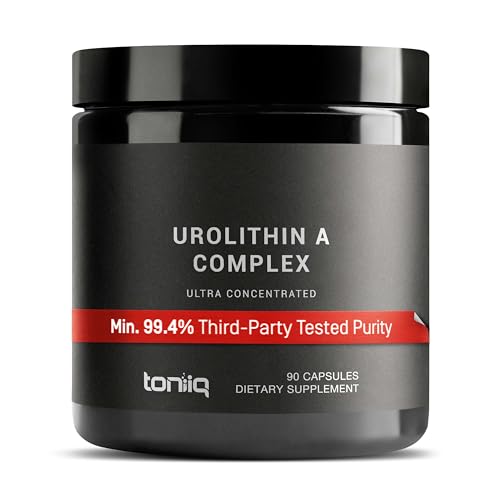
🛒 Where to Buy Urolithin A
- Timeline Mitopure SoftgelsClinically studied
softgels, 500 mg/day — The clinically studied form (Amazentis); used in the human trials. - Pure Encapsulations Renual
caplique capsules, 250 mg Mitopure Urolithin A/serving (with resveratrol + CoQ10) — established clinical-supplement brand, third-party tested. - ProHealth Longevity Urolithin A
capsules, 500 mg — Longevity-focused brand, often higher dose. - Double Wood Urolithin A
capsules, 250-500 mg — Budget-friendly, widely available, COA on request.
As an Amazon Associate we earn from qualifying purchases. Prices and availability vary; verify dose and third-party testing before buying.

A Note on the Evidence
The combinations discussed here are based on mechanistic reasoning and independent evidence for individual compounds—not on human trials testing these stacks directly. Anyone with a medical condition, taking medications, or who is pregnant or breastfeeding should consult a qualified healthcare provider before adding urolithin A or any multi-supplement regimen.
Frequently Asked Questions
Can I take urolithin A with NMN or NR at the same time?
There is no known safety concern with combining these, and the mechanistic rationale is reasonable—urolithin A supports mitochondrial clearance through mitophagy while NAD+ precursors support mitochondrial function and sirtuin signaling [2]. However, no human trial has tested this combination directly, so claims of synergy are speculative.
Does urolithin A help with muscle loss as we age?
Mitochondrial dysfunction is recognized as a key driver of age-related muscle decline, and nutritional strategies targeting mitochondrial renewal are considered a promising complement to exercise and adequate protein intake [3]. Muscle health outcomes were also highlighted at major cachexia research conferences as involving multiple intersecting mechanisms beyond protein synthesis alone . Urolithin A is one tool in this broader picture, not a standalone solution.
Should I take pomegranate extract on top of urolithin A?
Pomegranate and similar ellagitannin-rich supplements are dietary precursors to urolithin A, converted by gut bacteria. If you are already supplementing with pre-formed urolithin A, adding ellagitannin sources may provide little additional urolithin A—particularly if your gut microbiome composition means you are a low producer [7][6]. Ellagic acid may have independent biological activities, but additional stacking for urolithin A production specifically is likely unnecessary.
Is there any evidence for urolithin A improving exercise performance?
A 2025 randomized trial in highly trained male distance runners found that urolithin A supplementation was associated with improvements in running performance, recovery markers, and mitochondrial biomarkers [1]. This is an encouraging signal, but findings from elite athletes may not directly translate to recreational exercisers or sedentary populations.
Can I combine urolithin A with prebiotic fiber supplements?
Prebiotic fiber supports gut microbiome health, and a 2026 study found that ellagic acid and inulin together showed complementary effects with reduced adverse GI reactions from inulin [8]. For pre-formed urolithin A, the microbial conversion step is bypassed, so fiber’s main value here would be general gut and microbiome health rather than increasing urolithin A production directly.
How much does gut microbiome composition matter when building a urolithin A stack?
It matters primarily if you are relying on dietary sources (pomegranate, walnuts, oak-aged products) rather than pre-formed urolithin A supplements. A substantial portion of the population cannot efficiently convert ellagitannins to urolithin A due to their microbiome composition, regardless of how many precursor-rich foods or botanicals they consume [6]. Pre-formed supplementation bypasses this limitation entirely.
References
- Whitfield J et al. Evaluating the Impact of Urolithin A Supplementation on Running Performance, Recovery, and Mitochondrial Biomarkers in Highly Trained Male Distance Runners. Sports medicine (Auckland, N.Z.) (2025). PMID 40839339
- DiNicolantonio JJ et al. Nutraceutical activation of Sirt1: a review. Open heart (2022). PMID 36522127
- Broome SC et al. Mitochondria as Nutritional Targets to Maintain Muscle Health and Physical Function During Ageing. Sports medicine (Auckland, N.Z.) (2024). PMID 39060742
- Ebner N et al. Silver linings on the horizon: highlights from the 10th Cachexia Conference. Journal of cachexia, sarcopenia and muscle (2018). PMID 29417752
- Ebner N et al. Recent developments in the field of cachexia, sarcopenia, and muscle wasting: highlights from the 11th Cachexia Conference. Journal of cachexia, sarcopenia and muscle (2019). PMID 30920774
- Natella F et al. Absorption, metabolism, and effects at transcriptome level of a standardized French oak wood extract, Robuvit, in healthy volunteers: pilot study. Journal of agricultural and food chemistry (2014). PMID 24354337
- Eskra JN et al. Effects of Black Raspberries and Their Ellagic Acid and Anthocyanin Constituents on Taxane Chemotherapy of Castration-Resistant Prostate Cancer Cells. Scientific reports (2019). PMID 30867440
- Senavirathna T et al. Ellagic Acid Reduces Inulin's Adverse Effects: A Combined Approach to Enhance Therapeutic Potential in Nonalcoholic Steatohepatitis. Molecular nutrition & food research (2026). PMID 41958187
These statements have not been evaluated by the Food and Drug Administration. This information is not intended to diagnose, treat, cure, or prevent any disease. Content is for informational purposes only and is not medical advice; consult a qualified healthcare provider before starting any supplement. As an Amazon Associate we earn from qualifying purchases.