Creatine monohydrate has decades of research behind it and a well-understood mechanism: it replenishes the phosphocreatine energy system in muscle cells, supporting short bursts of high-intensity effort. Urolithin A is a newer arrival to the conversation, with a fundamentally different mechanism—it works upstream of energy production by triggering mitophagy, the cellular process that clears out damaged mitochondria so healthier ones can take their place.
Both compounds have attracted serious clinical interest for muscle health and physical performance, but they address different biological bottlenecks. Understanding what each one actually does—and what the evidence does and does not show—can help you have a more informed conversation with a healthcare provider about whether either belongs in your routine.
Key Takeaways
- Creatine monohydrate replenishes the phosphocreatine energy system and has strong evidence for improving high-intensity exercise performance and muscle mass, especially when combined with resistance training [1][2].
- Urolithin A works by inducing mitophagy—clearing out damaged mitochondria—and has shown benefits for muscle endurance and mitochondrial health markers in randomized trials in middle-aged and older adults [3][4].
- The two compounds address different biological bottlenecks: creatine is an acute energy-supply intervention; urolithin A is a longer-term mitochondrial quality-control intervention.
- Benefits from creatine can appear within days to a week; urolithin A effects in clinical trials emerged over weeks to months of consistent use.
- No head-to-head or combination trial currently exists—comparisons between the two compounds are mechanistic, not directly tested against each other.
How Creatine Works in Muscle
Creatine is stored in skeletal muscle primarily as phosphocreatine. During short, intense efforts—a heavy lift, a sprint, a rapid jump—phosphocreatine donates a phosphate group to regenerate ATP (adenosine triphosphate), the cell’s primary energy currency, faster than other metabolic pathways can. Supplementing with creatine monohydrate increases the total phosphocreatine pool in muscle, which means more ATP can be regenerated quickly during high-demand activity.
This mechanism is well-characterized and has earned creatine monohydrate one of the most robust safety and efficacy profiles in sports nutrition. A position statement from the International Society of Sports Nutrition concluded that creatine monohydrate is the most effective ergogenic nutritional supplement available for increasing high-intensity exercise capacity and lean body mass during training [1]. The effect is most pronounced for efforts lasting roughly 10–30 seconds, with benefits tapering off for longer-duration aerobic work.

How Urolithin A Works: Mitophagy and Mitochondrial Renewal
Urolithin A works through a different pathway entirely. Mitochondria—the organelles responsible for generating most of the ATP your cells use—accumulate damage over time. When that damaged mitochondrial population grows, energy production becomes less efficient and cellular stress increases. Mitophagy is the quality-control process that selectively removes dysfunctional mitochondria, making room for healthier replacements.
Urolithin A is a postbiotic compound produced when gut bacteria metabolize ellagitannins found in foods like pomegranates, walnuts, and certain berries. Research in model organisms showed it directly induces mitophagy, extending lifespan in C. elegans and improving muscle function in rodents [5]. In human cells and clinical studies, the working hypothesis is that by stimulating mitophagy, urolithin A helps restore a higher-quality mitochondrial pool—particularly relevant in aging muscle where mitochondrial dysfunction accumulates [6].
It is worth noting that only about 30–40% of people produce meaningful amounts of urolithin A from food because gut microbiome composition varies widely. Oral supplementation bypasses this conversion step, which is why clinical trials have used a direct supplement form.

Clinical Evidence for Urolithin A
Human trial evidence for urolithin A has grown notably since 2022. A randomized controlled trial in middle-aged adults found that supplementation improved muscle strength, exercise performance, and biomarkers associated with mitochondrial health compared to placebo [3]. A separate randomized clinical trial published in JAMA Network Open focused on older adults and found improvements in muscle endurance and mitochondrial health markers after urolithin A supplementation [4].
Additional evidence comes from a study in patients with muscular dystrophy, where urolithin A improved muscle function by activating mitophagy pathways [7]. A 2024 systematic review examining urolithin A studies in humans concluded that the compound shows promise for targeting aging-related decline, though the authors noted the evidence base is still developing and more large-scale trials are needed [8].

An important nuance: urolithin A’s benefits in muscle appear to be primarily about mitochondrial quality and endurance capacity rather than explosive strength or maximal power output—the domains where creatine is most established.
Clinical Evidence for Creatine
Creatine’s clinical record is substantially longer. Meta-analyses in older adults—a population where both muscle mass and strength are clinically important—have found that creatine supplementation combined with resistance training produces meaningful gains in muscle strength and muscle mass compared to training alone [2]. An umbrella review of nutritional interventions for muscle in older people included creatine among the interventions with meaningful supporting evidence [9].
There is also growing interest in creatine beyond athletic performance. Research has explored its relevance across different populations including older women [10], and a 2024 review examined the evidence for creatine’s effects on muscle, bone, and brain in older adults, noting that while muscle evidence is strong, some other claimed benefits require more research [11]. One study examining creatine and resistance training in older adults also found favorable effects on oxidative stress markers and quality of life [12], suggesting the benefits may extend beyond the phosphocreatine energy pathway alone.
Key Differences: Mechanism, Population, and Purpose
The most fundamental difference between these two compounds is the biological problem each one addresses. Creatine tops up an acute energy reserve—it helps muscle cells perform harder, faster, and recover between sets. The effect is relatively immediate: phosphocreatine stores saturate within a few days to a week of loading, and performance benefits can be measurable soon after. Urolithin A, by contrast, works on cellular maintenance. It takes weeks to months of consistent supplementation before mitophagy-related changes in mitochondrial health markers appear in clinical studies [3][4].
Their target populations also differ in emphasis. Creatine has the most robust evidence in the context of resistance training—people actively loading their muscles benefit most from a larger phosphocreatine pool. Urolithin A research has focused heavily on aging-related mitochondrial decline, with trials enrolling middle-aged and older adults rather than trained athletes. This does not mean younger people cannot benefit, but it suggests the compound may be most relevant where mitochondrial dysfunction is already a factor.
A practical way to think about it: creatine is a fuel-supply intervention and urolithin A is a fuel-system maintenance intervention. One fills the tank faster; the other helps keep the engine running cleanly.
Can They Work Together?
There is no clinical trial as of this writing that has directly tested urolithin A and creatine in combination, so any claim about a synergistic effect would go beyond the current evidence. What can be said is that the mechanisms do not overlap in any obvious way that would create interference—creatine operates via the phosphagen system and urolithin A via mitophagy and mitochondrial quality control. They address separate aspects of muscle energy metabolism.
From a theoretical standpoint, creatine could support higher training intensity in the short term while urolithin A supports the mitochondrial infrastructure that sustains energy production over time. However, this remains speculative. Anyone considering combining supplements should discuss it with a healthcare provider, particularly if they have underlying health conditions or take medications.
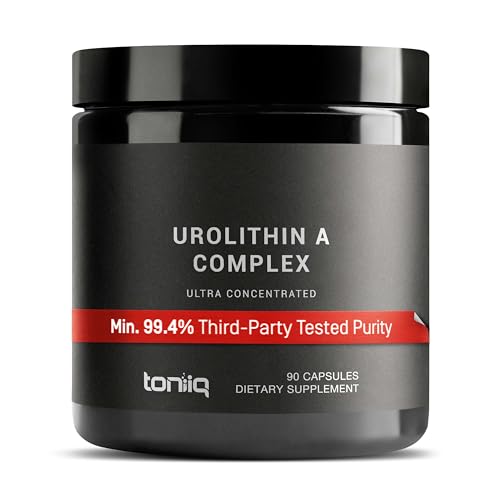
🛒 Where to Buy Urolithin A

- Timeline Mitopure SoftgelsClinically studied
softgels, 500 mg/day — The clinically studied form (Amazentis); used in the human trials. - Pure Encapsulations Renual
caplique capsules, 250 mg Mitopure Urolithin A/serving (with resveratrol + CoQ10) — established clinical-supplement brand, third-party tested. - ProHealth Longevity Urolithin A
capsules, 500 mg — Longevity-focused brand, often higher dose. - Double Wood Urolithin A
capsules, 250-500 mg — Budget-friendly, widely available, COA on request.
As an Amazon Associate we earn from qualifying purchases. Prices and availability vary; verify dose and third-party testing before buying.
A Note on the Evidence
The evidence for both compounds continues to evolve, and most urolithin A trials to date have been relatively short-term and conducted in specific age groups—results may not generalize to all populations. Neither supplement is a substitute for medical treatment or a replacement for a balanced diet and regular physical activity; anyone with a health condition, taking medications, or pregnant should speak with a qualified healthcare provider before starting either supplement.
Frequently Asked Questions
Does urolithin A actually increase muscle strength like creatine does?
A randomized trial in middle-aged adults found urolithin A improved muscle strength and exercise performance compared to placebo [3], and a JAMA Network Open trial in older adults found improvements in muscle endurance [4]. However, the magnitude and mechanism of strength gains differ from creatine—urolithin A’s benefits appear linked to mitochondrial health rather than the phosphocreatine energy reserve that creatine targets.
How quickly does each supplement take effect?
Creatine loading saturates muscle phosphocreatine stores within approximately five to seven days, and performance benefits are often measurable soon after [1]. Urolithin A clinical trials have typically run for four weeks or longer before significant changes in mitochondrial health markers and performance become apparent [3][4], reflecting the time needed for mitophagy-driven mitochondrial renewal.
Is creatine safe for long-term use?
Long-term use of creatine monohydrate at recommended doses has a well-established safety profile in healthy individuals, and the International Society of Sports Nutrition has stated it is one of the safest and most well-studied nutritional supplements available [1]. People with kidney disease or other conditions should consult a physician before use.
Who is urolithin A most likely to benefit?
Clinical trial evidence to date has primarily enrolled middle-aged and older adults, populations where mitochondrial dysfunction in muscle is more prevalent [3][4][8]. A 2024 systematic review noted urolithin A shows promise for addressing aging-related decline, though the authors emphasized the need for larger and longer trials [8].
Does everyone absorb urolithin A the same way from food?
No. Urolithin A is produced by gut bacteria from ellagitannins in foods like pomegranates and walnuts, and the ability to make meaningful amounts depends heavily on individual gut microbiome composition [6]. A substantial portion of people produce little or no urolithin A from dietary sources, which is why clinical trials use a directly supplemented form.
Can creatine benefit older adults, not just athletes?
Yes. A meta-analysis found creatine supplementation combined with resistance training improved muscle strength and mass in older females [2], and a review of nutritional interventions for muscle in older people identified creatine as having meaningful supporting evidence [9]. Research has also examined creatine’s potential benefits for muscle, bone, and cognitive health in aging populations, though the evidence is stronger for muscle outcomes than others [11].
References
- Kreider RB et al. International Society of Sports Nutrition position stand: safety and efficacy of creatine supplementation in exercise, sport, and medicine. Journal of the International Society of Sports Nutrition (2017). PMID 28615996
- Dos Santos EEP et al. Efficacy of Creatine Supplementation Combined with Resistance Training on Muscle Strength and Muscle Mass in Older Females: A Systematic Review and Meta-Analysis. Nutrients (2021). PMID 34836013
- Singh A et al. Urolithin A improves muscle strength, exercise performance, and biomarkers of mitochondrial health in a randomized trial in middle-aged adults. Cell reports. Medicine (2022). PMID 35584623
- Liu S et al. Effect of Urolithin A Supplementation on Muscle Endurance and Mitochondrial Health in Older Adults: A Randomized Clinical Trial. JAMA network open (2022). PMID 35050355
- Ryu D et al. Urolithin A induces mitophagy and prolongs lifespan in C. elegans and increases muscle function in rodents. Nature medicine (2016). PMID 27400265
- D'Amico D et al. Impact of the Natural Compound Urolithin A on Health, Disease, and Aging. Trends in molecular medicine (2021). PMID 34030963
- Luan P et al. Urolithin A improves muscle function by inducing mitophagy in muscular dystrophy. Science translational medicine (2021). PMID 33827972
- Kuerec AH et al. Targeting aging with urolithin A in humans: A systematic review. Ageing research reviews (2024). PMID 39002645
- Gielen E et al. Nutritional interventions to improve muscle mass, muscle strength, and physical performance in older people: an umbrella review of systematic reviews and meta-analyses. Nutrition reviews (2021). PMID 32483625
- Smith-Ryan AE et al. Creatine Supplementation in Women's Health: A Lifespan Perspective. Nutrients (2021). PMID 33800439
- Candow DG et al. Effects of Creatine Monohydrate Supplementation on Muscle, Bone and Brain- Hope or Hype for Older Adults?. Current osteoporosis reports (2024). PMID 39509039
- Amiri E et al. The role of resistance training and creatine supplementation on oxidative stress, antioxidant defense, muscle strength, and quality of life in older adults. Frontiers in public health (2023). PMID 37206869
These statements have not been evaluated by the Food and Drug Administration. This information is not intended to diagnose, treat, cure, or prevent any disease. Content is for informational purposes only and is not medical advice; consult a qualified healthcare provider before starting any supplement. As an Amazon Associate we earn from qualifying purchases.