Urolithin A is a compound produced when gut bacteria metabolize ellagitannins: polyphenols found in foods like pomegranates, walnuts, and certain berries. Because not everyone’s gut microbiome can make this conversion efficiently, interest has grown in supplementing urolithin A directly. Its most studied mechanism is the activation of mitophagy, a cellular housekeeping process that removes damaged mitochondria and allows healthier ones to take their place.
For men specifically, questions center on whether urolithin A might support muscle function, energy metabolism, and reproductive health. The research base is still developing, and much of it comes from animal models or in vitro work. This article summarizes what the current evidence does and does not show, so you can form a realistic picture rather than a hype-driven one.
Key Takeaways
- Urolithin A is proposed to stimulate mitophagy, the cellular removal of damaged mitochondria, and most proposed benefits are attributed to that mechanism. In a mouse liver study, protection persisted even when mitophagy was blocked, so the mechanism is not settled [4][5].
- Animal research suggests urolithin A may protect sperm quality and embryo health under metabolic stress such as diabetes [1].
- Leydig cell mitochondrial integrity is important for testosterone production; disrupted mitophagy impairs steroidogenesis [2], though urolithin A’s direct effect on Leydig cells has not yet been established in research.
- Pomegranate ellagitannin precursors show antiaromatase activity in lab studies [3], but clinical hormone effects in men have not been demonstrated.
- Most men’s-health-specific evidence is still in animal or cell models; human clinical trials focused on men remain limited.
What Is Mitophagy and Why Does It Matter for Men's Health
Mitochondria are the organelles that generate most of a cell’s usable energy. Over time, and under metabolic stress, individual mitochondria accumulate damage and begin producing more reactive oxygen species than useful energy. Mitophagy is the selective process by which cells tag and digest these dysfunctional mitochondria, clearing the way for newer, more efficient ones.
Urolithin A is one of the few dietary-derived compounds shown in laboratory and animal work to stimulate this process. The implication is that, in tissues with high energy demands (skeletal muscle, heart, testes) keeping the mitochondrial pool healthy could influence function and resilience. This is the central rationale behind interest in urolithin A, and it applies to both sexes. Men’s interest is sometimes specifically tied to muscle mass maintenance and reproductive cell health, both of which depend heavily on mitochondrial output.

Urolithin A and Male Reproductive Health: Emerging Animal Research
One of the more intriguing recent lines of research concerns urolithin A’s potential role in protecting sperm quality under metabolic stress. A 2026 rat study examined whether urolithin A could counter the reproductive damage caused by experimentally induced diabetes [1]. Diabetes is associated with oxidative stress in the male reproductive tract, and the study found that urolithin A administration helped protect against what the researchers called ‘pathospermia’ (broadly, abnormal sperm parameters) as well as reducing markers of embryotoxicity in the offspring of affected animals.
Research note: In a pilot trial in 20 academy soccer players, the Yo-Yo endurance test (primary outcome) improved 239 m more on urolithin A than placebo (95% CI 20 to 454 m, p = 0.048), a wide interval from a 20-player trial [11].
This is animal research, and it cannot be directly extrapolated to men. However, the mechanistic rationale is coherent: sperm cells have very high mitochondrial activity, since the mitochondria wrapped around the sperm midpiece power motility. If mitophagy clears dysfunctional mitochondria from developing sperm cells, the functional pool should be healthier. The 2026 study adds a data point to this hypothesis, while making clear that human trials in this area are still needed [1].
Leydig Cells, Testosterone, and Mitochondrial Integrity
Testosterone in men is primarily produced by Leydig cells in the testes, and Leydig cell function is tightly linked to mitochondrial health. Steroidogenesis, the process by which cholesterol is converted to testosterone, takes place partly in the inner mitochondrial membrane. When mitochondria are damaged or when mitophagy is disrupted, this process can be impaired.
A 2026 study on the environmental toxicant trihexyl phosphate demonstrated this connection clearly: exposure to this compound disrupted mitophagy in Leydig cells, triggered an inflammatory signaling cascade involving mitochondrial DNA and the cGAS-STING pathway, and ultimately impaired steroidogenic function [2]. The study did not test urolithin A, but it illustrates why compounds that support mitophagy might be relevant to testosterone-producing cells. If mitophagy keeps the mitochondrial pool in Leydig cells functional, it could in principle support normal steroidogenic output, though this remains speculative in the absence of direct urolithin A studies on Leydig cells.

The broader takeaway is that Leydig cell mitochondrial health is not a niche concern. It sits at the intersection of environmental exposure, metabolic status, and male hormone production, and mitophagy is a key regulatory mechanism [2].
Muscle Function and Physical Performance
Skeletal muscle is one of the most mitochondria-dense tissues in the body, and age-related decline in muscle mass (sarcopenia) is partly attributed to accumulating mitochondrial dysfunction. Urolithin A has been studied in the context of muscle health in older adults, with human trials reporting mixed results. In a 4-month trial of 88 middle-aged adults the main endpoint, peak power on a cycling test, did not change significantly, and in a trial of 66 older adults the main endpoints (walking distance and muscle energy production) did not improve versus placebo, while secondary measures such as muscle endurance did. Both trials were funded by Amazentis, the maker of Mitopure [6][7].
What can be said from first principles and the available mechanistic evidence is that muscle cells depend on efficient mitophagy to maintain performance. Men tend to carry more skeletal muscle mass than women on average, making this a particularly relevant area of interest. The degree to which urolithin A supplementation translates into meaningful real-world muscle improvements for any individual will depend on factors including baseline mitochondrial health, gut microbiome composition, dose, and age.
Trials in men are small. In 20 resistance-trained male athletes taking 1 g a day for 8 weeks, bench press and squat gains did not differ significantly from placebo, and the authors state the study did not show improved muscle strength. In 42 highly trained male distance runners, 4 weeks of 1,000 mg a day did not significantly improve a 3000 m time trial, although perceived exertion was lower; that trial was funded by Amazentis [9][10].

What About Hormones and Aromatase?
Aromatase is the enzyme that converts androgens (including testosterone) into estrogens. In men, excessive aromatase activity can reduce circulating testosterone and raise estrogen levels. Pomegranate-derived compounds, the dietary source from which urolithin A is ultimately derived, have been examined for aromatase-inhibiting properties.
A 2010 laboratory study on pomegranate ellagitannin-derived compounds, urolithin A’s precursors, found antiproliferative and antiaromatase activity in breast cancer cell lines in vitro [3]. This does not mean that taking urolithin A will meaningfully alter testosterone-to-estrogen ratios in healthy men. The context was cancer cell research, concentrations used in vitro may not reflect what tissues are actually exposed to after oral ingestion, and no human hormone data for urolithin A has been published. The finding is mechanistically interesting but should not be interpreted as a clinically proven effect.
What Is Not Yet Known
The evidence base for urolithin A in men is still early. The reproductive findings come from animal models [1]. The Leydig cell work describes a mechanism relevant to male hormone production but did not test urolithin A and was done in cells exposed to an environmental toxicant, not in men [2]. The aromatase work is in cancer cell lines, not in healthy male physiology [3]. Human clinical trials specifically designed around men’s hormonal or reproductive outcomes are, at the time of writing, not yet a mature literature.
This does not make the research uninteresting: animal and mechanistic studies are valid steps in the scientific process, and the mitophagy rationale is grounded in solid cell biology. It does mean that anyone reading marketing claims about urolithin A ‘boosting testosterone’ or ‘improving fertility’ should look for the actual evidence behind those claims rather than accepting them at face value.
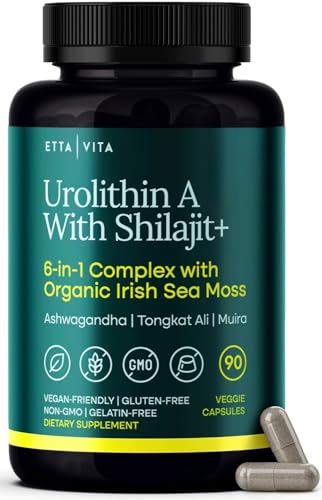
🛒 Where to Buy Urolithin A
- Timeline Mitopure SoftgelsClinically studied
softgels, 500 mg/day: The clinically studied form (Amazentis); used in the human trials. - Pure Encapsulations Renual
caplique capsules, 250 mg Mitopure Urolithin A/serving (with resveratrol + CoQ10): adds resveratrol and CoQ10, a combination the published urolithin A trials did not test. - ProHealth Longevity Urolithin A
capsules, 500 mg: Longevity-focused brand, often higher dose. - Double Wood Urolithin A
capsules, 250-500 mg: Budget-friendly, widely available, COA on request.
As an Amazon Associate we earn from qualifying purchases. Prices and availability vary; verify dose and third-party testing before buying.
A Note on the Evidence
The research on urolithin A and men’s health is still in early stages, with key findings coming from animal models and cell studies rather than large human clinical trials; results may not translate directly to men. This article is informational only and is not a substitute for personalized medical advice: consult a qualified healthcare provider before starting any supplement, particularly if you have a health condition or are trying to conceive.
Frequently Asked Questions
Can urolithin A improve sperm quality?
One 2026 rat study found that urolithin A helped protect against diabetes-induced sperm abnormalities and reduced embryotoxicity markers [1]. This is promising mechanistically, given that sperm motility relies on mitochondrial energy production. However, this was an animal study, and there are no published human clinical trials on urolithin A and sperm parameters.
Does urolithin A affect testosterone levels?
No published clinical trial has shown that urolithin A raises testosterone in men. Related research shows that mitophagy disruption impairs steroidogenesis in Leydig cells [2], suggesting mitophagy support could theoretically matter for testosterone production, but this has not been tested directly with urolithin A in human trials.
What is mitophagy and why does it matter for men?
Mitophagy is the process by which cells identify and break down damaged mitochondria, replacing them with healthier ones. In tissues with high energy demands, including muscle and testosterone-producing Leydig cells, efficient mitophagy is important for normal function. Urolithin A is proposed to activate this pathway, mostly on the basis of cell and animal work, and at least one mouse study found its benefit did not depend on mitophagy [4][5].
Is urolithin A an aromatase inhibitor?
Pomegranate ellagitannin-derived compounds, which are precursors to urolithin A, showed antiaromatase activity in breast cancer cell lines in a laboratory study [3]. This is mechanistically interesting but does not constitute clinical evidence that urolithin A inhibits aromatase in the bodies of healthy men. In vitro concentrations and in vivo tissue exposures are often very different.
Who produces urolithin A naturally?
Urolithin A is produced when gut bacteria metabolize ellagitannins from foods like pomegranates and walnuts. Published estimates vary. In a US trial of 100 healthy adults, 33% could not convert pomegranate juice to urolithin A and 27% converted poorly, leaving about 40% as high converters, while earlier small southern-European studies put the share who make urolithins at 30 to 60% [8]. This variability is part of why supplemental forms have been developed.
Are there any safety concerns for men taking urolithin A?
Early clinical research on urolithin A supplements has not identified significant safety signals in healthy adults at studied doses, though the long-term evidence base is still limited. Men with hormone-sensitive conditions, those on medications affecting mitochondrial function, or those with reproductive health concerns should consult a healthcare provider before supplementing.
References
- Haddadi-Salmasi R et al. Urolithin A safeguards against diabetes-induced pathospermia and embryotoxicity in rats. Avicenna journal of phytomedicine (2026). PMID 42153016
- Dai Y et al. Trihexyl phosphate exposure disrupts mitophagy and activates mtDNA-cGAS-STING signaling to drive pyroptosis and steroidogenic impairment in Leydig cells. Journal of hazardous materials (2026). PMID 41875563
- Adams LS et al. Pomegranate ellagitannin-derived compounds exhibit antiproliferative and antiaromatase activity in breast cancer cells in vitro. Cancer prevention research (Philadelphia, Pa.) (2010). PMID 20051378
- Gao Z et al. Urolithin A protects against acetaminophen-induced liver injury in mice via sustained activation of Nrf2. International journal of biological sciences (2022). PMID 35342347
- Peter M. J. Quinn et al. PINK1/PARKIN signalling in neurodegeneration and neuroinflammation. Acta Neuropathologica Communications (2020). PMID 33168089
- Singh A et al. Urolithin A improves muscle strength, exercise performance, and biomarkers of mitochondrial health in a randomized trial in middle-aged adults. Cell reports. Medicine (2022). PMID 35584623
- Liu S et al. Effect of Urolithin A Supplementation on Muscle Endurance and Mitochondrial Health in Older Adults: A Randomized Clinical Trial. JAMA network open (2022). PMID 35050355
- Singh A et al. Direct supplementation with Urolithin A overcomes limitations of dietary exposure and gut microbiome variability in healthy adults to achieve consistent levels across the population. European journal of clinical nutrition (2022). PMID 34117375
- Zhao H et al. Assessment of Urolithin A effects on muscle endurance, strength, inflammation, oxidative stress, and protein metabolism in male athletes with resistance training: an 8-week randomized, double-blind, placebo-controlled study. Journal of the International Society of Sports Nutrition (2024). PMID 39487653
- Whitfield J et al. Evaluating the Impact of Urolithin A Supplementation on Running Performance, Recovery, and Mitochondrial Biomarkers in Highly Trained Male Distance Runners. Sports medicine (Auckland, N.Z.) (2025). PMID 40839339
- Monsalve Acevedo A et al. Effects of Urolithin A supplementation on performance and antioxidant status in academy soccer players during preseason: a pilot randomised controlled trial. Frontiers in nutrition (2025). PMID 41245402
These statements have not been evaluated by the Food and Drug Administration. This information is not intended to diagnose, treat, cure, or prevent any disease. Content is for informational purposes only and is not medical advice; consult a qualified healthcare provider before starting any supplement. As an Amazon Associate we earn from qualifying purchases.