Urolithin A is a compound produced when gut bacteria metabolize ellagitannins — polyphenols found in pomegranates, walnuts, and certain berries. Because not everyone’s microbiome converts these precursors efficiently, urolithin A supplements have attracted attention as a way to deliver the compound directly. Over the past few years, researchers have begun examining whether it can meaningfully support exercise performance and muscle health.
The biological rationale centers on mitophagy: a cellular housekeeping process that clears out damaged mitochondria so healthier ones can take their place. Mitochondria power muscle contractions, and their quality declines with age and heavy training loads. Urolithin A appears to activate this renewal pathway, which has led researchers to ask whether supplementation might translate into measurable gains in endurance, strength, or recovery — not just in older adults, but in trained athletes as well.
Key Takeaways
- Urolithin A activates mitophagy — a cellular process that clears damaged mitochondria and supports renewal of more efficient ones, which is the leading proposed mechanism for its effects on muscle health.
- A randomized trial in middle-aged adults found improvements in aerobic endurance and muscle strength after four months of supplementation, along with favorable mitochondrial biomarkers [1].
- Evidence in trained athletes is more limited and less consistent; highly trained individuals may have less headroom for additional mitochondrial adaptation from a supplement [2].
- Preliminary data suggest urolithin A may support antioxidant status and muscle endurance in athletes, particularly during high-load training periods, but most trials are small and short-term [3][4].
- Individual responses likely vary based on gut microbiome composition, which affects how much urolithin A a person naturally produces from food.
The Mitochondrial Mechanism Behind Urolithin A
Mitochondria are the primary energy source for working muscles, but they accumulate damage over time. The cell has a built-in quality-control system called mitophagy — essentially, a selective recycling process that tags dysfunctional mitochondria for removal and replacement. When mitophagy slows down, damaged mitochondria accumulate, energy production becomes less efficient, and muscle fatigue sets in sooner.
Urolithin A is one of a small number of naturally occurring compounds shown to stimulate this mitophagy pathway. By promoting the clearance of worn-out mitochondria, it may help cells maintain a healthier, more efficient mitochondrial pool. This mechanism is distinct from antioxidants that simply neutralize free radicals; urolithin A acts more upstream, influencing the renewal process itself. A 2025 review summarizing the emerging sports nutrition evidence described this mitochondrial activation as the central rationale for investigating urolithin A in athletic populations [5].

Effects on Endurance Performance in Middle-Aged Adults
One of the more rigorous studies to date enrolled healthy middle-aged adults in a randomized, placebo-controlled trial testing urolithin A supplementation over four months. Participants taking urolithin A showed improvements in aerobic endurance — specifically in the distance covered during a standardized walking test — along with favorable changes in skeletal muscle mitochondrial gene expression and circulating biomarkers associated with mitochondrial function [1].
The same trial also reported modest but significant improvements in muscle strength compared to placebo. Notably, participants did not follow a structured exercise program during the study, suggesting these effects were not simply the result of increased training volume. Researchers interpreted the findings as evidence that urolithin A can support mitochondrial health in sedentary or lightly active middle-aged adults even without added exercise — though it is not clear whether the magnitude of benefit would be similar in people who already train regularly [1].
Evidence in Trained Athletes: Distance Runners
Studies in middle-aged non-athletes raise a separate question: does urolithin A offer anything to people whose mitochondria are already being stressed and adapted through regular training? A 2025 randomized trial addressed this directly by recruiting highly trained male distance runners and measuring the effects of urolithin A supplementation on running performance, recovery markers, and mitochondrial biomarkers [2].
The results were more modest than those seen in sedentary middle-aged populations. Some mitochondrial biomarkers shifted in a direction consistent with the proposed mechanism, but performance outcomes were less clear-cut. This pattern is not unusual in sports nutrition research: athletes who already train at high volumes have already driven substantial mitochondrial adaptation through exercise itself, which may leave less room for a supplement to produce an additional measurable effect. The authors noted that longer supplementation periods or different dosing strategies might be needed before conclusions can be drawn for elite endurance athletes [2].

Muscle Endurance, Strength, and Recovery in Resistance-Trained Athletes
A 2024 double-blind, placebo-controlled trial examined urolithin A’s effects specifically in male athletes engaged in resistance training over eight weeks. The study measured muscle endurance, maximal strength, markers of inflammation, oxidative stress, and protein metabolism. Participants taking urolithin A showed improvements in muscle endurance and some favorable changes in oxidative stress markers compared to placebo [3].
Inflammation and protein metabolism markers also trended in a positive direction in the supplemented group, though the researchers were careful to note that the sample size was limited and that these findings should be considered preliminary. The eight-week window may not be sufficient to capture the full scope of adaptations that mitophagy-driven mitochondrial renewal could theoretically produce, particularly for strength outcomes that typically require longer training cycles to manifest [3].
Antioxidant Status and Team Sport Applications
A 2025 pilot randomized controlled trial tested urolithin A in academy soccer players during a preseason training block — a period characterized by high training loads and elevated oxidative stress. Players receiving urolithin A showed improvements in antioxidant status compared to the placebo group, with some performance-related measures also favoring the supplement [4].
The pilot design means these findings are exploratory rather than definitive, and the small sample limits how confidently results can be generalized. Still, the preseason context is interesting because it represents a scenario where training-induced oxidative stress and incomplete recovery are common challenges. The authors suggested that urolithin A’s apparent support for antioxidant defenses might be particularly relevant during high-load training phases, warranting larger confirmatory trials [4].
Where the Evidence Currently Stands
A 2025 narrative review of urolithin A in sports nutrition drew together findings from both preclinical and clinical studies, noting that the compound’s mechanistic rationale — mitophagy activation, mitochondrial renewal, downstream effects on muscle energy metabolism — is well-supported at the cellular level [5]. The translational picture for athletes, however, is still forming. Most human trials involve relatively small samples, short durations, and heterogeneous populations, making it difficult to draw firm conclusions about the size of any benefit or which athletes are most likely to respond.
It is also worth noting that not all people produce urolithin A from dietary sources at comparable rates. Gut microbiome composition influences how efficiently ellagitannin precursors are converted, which means baseline urolithin A status likely varies considerably among individuals — a factor that could affect supplement responsiveness but that most trials have not measured or stratified by [5]. Separately, research into related autophagy-activating pathways in skeletal muscle aging suggests that the mitophagy mechanism may be especially relevant as muscle quality declines with age, reinforcing the case for studying this compound across different age groups [6].
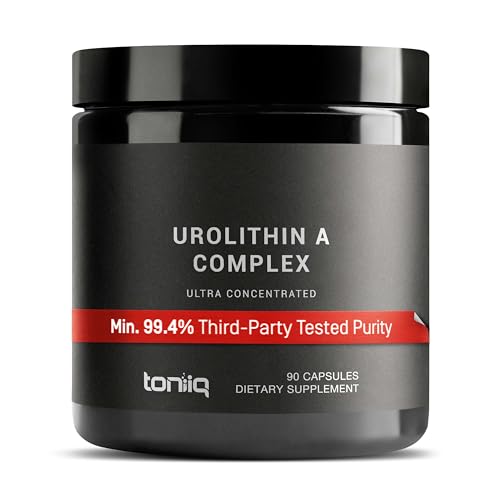
🛒 Where to Buy Urolithin A
- Timeline Mitopure SoftgelsClinically studied
softgels, 500 mg/day — The clinically studied form (Amazentis); used in the human trials. - Pure Encapsulations Renual
caplique capsules, 250 mg Mitopure Urolithin A/serving (with resveratrol + CoQ10) — established clinical-supplement brand, third-party tested. - ProHealth Longevity Urolithin A
capsules, 500 mg — Longevity-focused brand, often higher dose. - Double Wood Urolithin A
capsules, 250-500 mg — Budget-friendly, widely available, COA on request.
As an Amazon Associate we earn from qualifying purchases. Prices and availability vary; verify dose and third-party testing before buying.

A Note on the Evidence
The human evidence base for urolithin A and exercise performance is still early — most trials are small, short, and not yet independently replicated at scale, so it is too soon to make strong claims about the size or consistency of any benefit. This article is for informational purposes only and does not constitute medical advice; anyone with a health condition, those taking medications, or those considering supplementation during pregnancy or competitive sport should consult a qualified healthcare professional before starting.
Frequently Asked Questions
How does urolithin A actually affect muscles at the cellular level?
Urolithin A stimulates mitophagy, the process by which cells identify and break down dysfunctional mitochondria so they can be replaced by healthier ones. Because mitochondria generate the energy that powers muscle contractions, maintaining a high-quality mitochondrial pool is important for sustained performance. A 2025 review described this mitochondrial activation as the central rationale for investigating urolithin A in athletic populations [5].
Has urolithin A been shown to improve exercise performance in humans?
The strongest human evidence comes from a randomized trial in middle-aged adults, which found improvements in aerobic endurance and muscle strength compared to placebo after four months of supplementation [1]. Results in trained athletes have been more modest and less consistent, suggesting that effects may vary by baseline fitness level and training status [2].
Does urolithin A help with recovery after training?
Some evidence suggests it may. A resistance training trial found favorable trends in oxidative stress and inflammation markers in athletes taking urolithin A over eight weeks [3], and a pilot trial in soccer players during preseason found improvements in antioxidant status [4]. However, both studies were small and the findings should be considered preliminary.
Do you need to supplement, or can you get enough from food?
Urolithin A is not present in food directly — it is produced by gut bacteria that metabolize ellagitannins from foods like pomegranates and walnuts. Conversion efficiency varies considerably between individuals based on microbiome composition, meaning that dietary intake does not reliably translate into meaningful urolithin A levels for everyone. This variability is part of why supplements have been studied as a more direct delivery method [5].
Is urolithin A only relevant for older adults?
Early research focused on older adults because mitophagy slows with age and mitochondrial quality is a key factor in age-related muscle decline. However, more recent trials have enrolled younger trained athletes, including distance runners and soccer academy players, exploring whether the compound offers anything to people who already exercise regularly [2][4]. Evidence in younger athletic populations is still limited.
What doses have been used in the research?
Clinical trials have generally used doses in the range of 500 mg to 1000 mg per day, though protocols differ across studies. The 2022 randomized trial in middle-aged adults that showed endurance and strength improvements used a 1000 mg daily dose over four months [1]. Most trials have been too short and too small to establish an optimal dose with confidence, and dosing guidance for athletic populations specifically remains an open question [5].
References
- Singh A et al. Urolithin A improves muscle strength, exercise performance, and biomarkers of mitochondrial health in a randomized trial in middle-aged adults. Cell reports. Medicine (2022). PMID 35584623
- Whitfield J et al. Evaluating the Impact of Urolithin A Supplementation on Running Performance, Recovery, and Mitochondrial Biomarkers in Highly Trained Male Distance Runners. Sports medicine (Auckland, N.Z.) (2025). PMID 40839339
- Zhao H et al. Assessment of Urolithin A effects on muscle endurance, strength, inflammation, oxidative stress, and protein metabolism in male athletes with resistance training: an 8-week randomized, double-blind, placebo-controlled study. Journal of the International Society of Sports Nutrition (2024). PMID 39487653
- Monsalve Acevedo A et al. Effects of Urolithin A supplementation on performance and antioxidant status in academy soccer players during preseason: a pilot randomised controlled trial. Frontiers in nutrition (2025). PMID 41245402
- Wang M et al. Emerging evidence of Urolithin A in sports nutrition: bridging preclinical findings to athletic applications. Frontiers in nutrition (2025). PMID 40453722
- Park SH et al. A Natural Autophagy Activator Castanea crenata Flower Alleviates Skeletal Muscle Ageing. Journal of cachexia, sarcopenia and muscle (2025). PMID 39873130
These statements have not been evaluated by the Food and Drug Administration. This information is not intended to diagnose, treat, cure, or prevent any disease. Content is for informational purposes only and is not medical advice; consult a qualified healthcare provider before starting any supplement. As an Amazon Associate we earn from qualifying purchases.