If you’ve noticed that your energy levels aren’t what they were in your 30s, you’re not imagining it. One well-documented contributor to age-related fatigue is the gradual decline in mitochondrial quality — the cellular machinery responsible for converting food into usable energy. As mitochondria accumulate damage over time, cells become less efficient at producing ATP, the molecule that powers nearly every biological process in your body.
Urolithin A is a compound produced in the gut when certain bacteria metabolize polyphenols found in pomegranates, berries, and walnuts. Research over the past decade has focused on its ability to activate mitophagy — the process by which cells identify and clear out damaged mitochondria to make room for healthier ones. This article examines what clinical trials and systematic reviews currently tell us about urolithin A, energy, and cellular health in midlife and beyond.
Key Takeaways
- Urolithin A activates mitophagy — the cellular process of clearing out damaged mitochondria — which naturally slows with age and is linked to declining energy and muscle function.
- Multiple randomized trials found that urolithin A supplementation improved muscle endurance and mitochondrial biomarkers in middle-aged and older adults compared to placebo [1] [2].
- Only about 30–40% of people efficiently produce urolithin A from diet alone due to gut microbiome differences, making supplementation the more reliable delivery method for most people [3].
- The evidence is promising but still limited — most trials are short-term, and long-term effects across diverse populations are not yet established.
- Urolithin A has a good safety profile in published human studies, but it is not a medical treatment and should not replace advice from a healthcare provider.
Why Mitochondrial Health Declines After 40
Mitochondria are dynamic organelles that constantly divide, fuse, and are recycled. In younger cells, a quality-control process called mitophagy efficiently tags and removes mitochondria that have become damaged or inefficient. With age, this recycling system slows down, allowing dysfunctional mitochondria to accumulate. The result is cells that produce less energy and generate more oxidative byproducts — a pattern associated with fatigue, reduced muscle strength, and broader markers of aging.
This decline isn’t uniform across people. Genetic factors, diet, exercise habits, and gut microbiome composition all influence how quickly mitochondrial quality degrades. Notably, the ability to produce urolithin A depends entirely on having the right gut bacteria. Studies estimate that only 30–40% of people are efficient converters of dietary ellagitannins into urolithin A, which is why direct supplementation has become a focus of clinical research [3].

How Urolithin A Activates Mitophagy
Urolithin A is currently the most potent known natural compound to activate mitophagy in human cells. It works by upregulating pathways — including PINK1/Parkin signaling — that tag damaged mitochondria for degradation and recycling. By clearing out dysfunctional mitochondria, cells can replace them with newer, more efficient ones, which in theory supports better energy production and reduced oxidative stress [3].
A landmark 2019 clinical study tested oral urolithin A supplementation in healthy older adults and demonstrated that it was safe and produced a measurable molecular signature consistent with improved mitochondrial and cellular health — including changes in mitochondrial gene expression and markers of mitophagy — compared to placebo [4]. This was an important proof-of-concept showing the pathway is not just active in laboratory models but also in living humans.

Clinical Evidence on Muscle Endurance and Physical Energy
Two randomized clinical trials have specifically examined muscle-related outcomes in older and middle-aged adults. A 2022 trial published in JAMA Network Open found that urolithin A supplementation improved muscle endurance in older adults, as measured by muscle fatigue resistance during repeated contractions, compared to placebo. The study also observed favorable changes in biomarkers of mitochondrial health [1].
A separate 2022 randomized trial in middle-aged adults reported improvements in muscle strength, exercise performance, and mitochondrial biomarkers after urolithin A supplementation compared to placebo [2]. Importantly, these were not elite athletes — they were generally healthy adults in the demographic where age-related energy decline typically begins to become noticeable.

A 2024 randomized, double-blind, placebo-controlled study in male athletes with resistance training found that 8 weeks of urolithin A supplementation was associated with improvements in muscle endurance and reductions in markers of oxidative stress and inflammation compared to placebo [5]. While athletes represent a specific population, the findings add to a consistent pattern across different groups.
What a 2024 Systematic Review Concludes
A 2024 systematic review published in Ageing Research Reviews examined the cumulative human evidence on urolithin A across health outcomes related to aging. The review concluded that the evidence supports urolithin A’s role in activating mitophagy and improving mitochondrial function in humans, and highlighted consistent signals across trials for improvements in muscle-related endpoints [5].
The review also noted that while findings are promising, most trials to date have been relatively short in duration and conducted in specific populations. Longer-term studies across more diverse groups are needed before strong conclusions can be drawn about the full scope of urolithin A’s effects on aging and energy. This is an important caveat for anyone interpreting the current body of evidence.

Emerging Research: Gut Microbiome and Urolithin A Production
Because urolithin A is produced in the gut rather than absorbed directly from food, individual differences in gut bacteria significantly affect how much of the compound a person actually generates. Research published in 2026 explored whether specific prebiotics — namely fructooligosaccharides combined with ellagic acid — could enhance the gut microbiome’s capacity to produce urolithin A, with downstream improvements in muscular endurance [6]. This line of research suggests that dietary strategies targeting gut bacteria may eventually offer an alternative or complement to direct supplementation.
A 2025 review in Frontiers in Nutrition examined the emerging evidence for urolithin A in sports nutrition, noting that the compound’s mechanism of action — enhancing mitochondrial quality through mitophagy — is relevant not just for aging populations but for anyone seeking to optimize cellular energy production and recovery [7].

Beyond Energy: Other Cellular Health Signals
Research has also examined urolithin A in contexts beyond skeletal muscle energy. A 2022 study in Aging Cell found that urolithin A improved mitochondrial health in joint tissue and was associated with reduced cartilage degeneration and pain in an osteoarthritis model [8]. While this study was not in humans, it illustrates that mitophagy activation may have relevance across multiple tissue types where mitochondrial decline contributes to age-related changes.
Taken together, the available evidence paints a picture of urolithin A as a compound with broad cellular relevance, rooted in a single, well-characterized mechanism: improving the efficiency of mitochondrial recycling. Whether this translates into subjectively noticeable improvements in daily energy levels remains an open question that individual responses and longer trials will need to address.
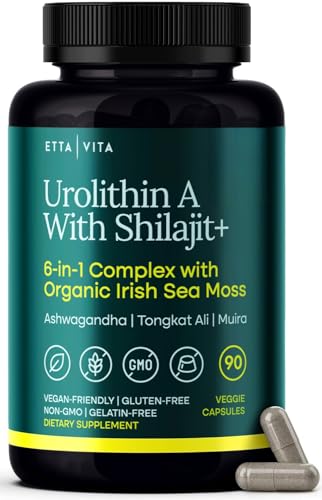
🛒 Where to Buy Urolithin A
- Timeline Mitopure SoftgelsClinically studied
softgels, 500 mg/day — The clinically studied form (Amazentis); used in the human trials. - Pure Encapsulations Renual
caplique capsules, 250 mg Mitopure Urolithin A/serving (with resveratrol + CoQ10) — established clinical-supplement brand, third-party tested. - ProHealth Longevity Urolithin A
capsules, 500 mg — Longevity-focused brand, often higher dose. - Double Wood Urolithin A
capsules, 250-500 mg — Budget-friendly, widely available, COA on request.
As an Amazon Associate we earn from qualifying purchases. Prices and availability vary; verify dose and third-party testing before buying.
A Note on the Evidence
The current evidence on urolithin A is promising but comes primarily from short-term trials in specific populations; long-term effects and benefits across diverse age groups, health conditions, and demographics have not yet been established. Urolithin A supplements are not regulated as drugs and this article is for informational purposes only — it is not medical advice, and anyone with a health condition, taking medications, or pregnant should consult a qualified healthcare provider before use.
Frequently Asked Questions
What does urolithin A actually do in the body?
Urolithin A activates mitophagy — the process by which cells identify and remove damaged mitochondria so they can be replaced with healthier ones. Mitochondria are the energy-producing structures inside cells, so improving their quality supports more efficient cellular energy production [3]. This mechanism has been confirmed in human studies [4].
Does urolithin A directly increase energy levels?
Clinical trials have not measured subjective energy directly as a primary endpoint. What they have shown is improved muscle endurance, better exercise performance, and favorable changes in mitochondrial biomarkers in middle-aged and older adults [2] [1]. Whether these translate into a felt sense of more energy varies by individual and has not been conclusively established.
Can I get enough urolithin A from pomegranates and berries?
Not reliably. While ellagitannins in pomegranates, walnuts, and some berries are converted to urolithin A by gut bacteria, this conversion depends heavily on which bacteria you harbor. Research estimates that only 30–40% of people are efficient converters [3]. This is why clinical trials have used direct supplementation rather than dietary interventions.
Who has been studied in the trials?
Studies have primarily enrolled healthy older adults (typically 65+) and middle-aged adults. One 2022 trial specifically enrolled middle-aged adults and found improvements in muscle strength and exercise performance [2]. A 2024 study examined male athletes with resistance training [5]. Most trials are relatively small and short-term.

Is urolithin A safe to take?
In published human studies, urolithin A at tested doses has shown a good safety profile with no serious adverse events reported [4]. However, long-term safety data beyond the trial periods (typically weeks to a few months) is limited. Anyone with a medical condition or taking medications should consult a healthcare provider before adding a new supplement.
How long does it take to see effects?
In the trials showing improvements in muscle endurance and mitochondrial biomarkers, supplementation periods ranged from 4 weeks to 4 months [1] [2]. There is no established timeline for when — or whether — an individual will notice a difference, and response likely varies based on age, baseline mitochondrial health, and other factors.
References
- Liu S et al. Effect of Urolithin A Supplementation on Muscle Endurance and Mitochondrial Health in Older Adults: A Randomized Clinical Trial. JAMA network open (2022). PMID 35050355
- Singh A et al. Urolithin A improves muscle strength, exercise performance, and biomarkers of mitochondrial health in a randomized trial in middle-aged adults. Cell reports. Medicine (2022). PMID 35584623
- D'Amico D et al. Impact of the Natural Compound Urolithin A on Health, Disease, and Aging. Trends in molecular medicine (2021). PMID 34030963
- Andreux PA et al. The mitophagy activator urolithin A is safe and induces a molecular signature of improved mitochondrial and cellular health in humans. Nature metabolism (2019). PMID 32694802
- Zhao H et al. Assessment of Urolithin A effects on muscle endurance, strength, inflammation, oxidative stress, and protein metabolism in male athletes with resistance training: an 8-week randomized, double-blind, placebo-controlled study. Journal of the International Society of Sports Nutrition (2024). PMID 39487653
- Zhang L et al. Fructooligosaccharides and ellagic acid synergistically enhance muscular endurance via targeting gut microbial urolithin A biosynthesis. Journal of advanced research (2026). PMID 41506451
- Wang M et al. Emerging evidence of Urolithin A in sports nutrition: bridging preclinical findings to athletic applications. Frontiers in nutrition (2025). PMID 40453722
- D'Amico D et al. Urolithin A improves mitochondrial health, reduces cartilage degeneration, and alleviates pain in osteoarthritis. Aging cell (2022). PMID 35778837
These statements have not been evaluated by the Food and Drug Administration. This information is not intended to diagnose, treat, cure, or prevent any disease. Content is for informational purposes only and is not medical advice; consult a qualified healthcare provider before starting any supplement. As an Amazon Associate we earn from qualifying purchases.