Urolithin A is a postbiotic compound formed when gut bacteria metabolize ellagitannins found in foods such as pomegranates, walnuts, and certain berries. Because production depends on each person’s individual microbiome, only a minority of people convert enough dietary precursors to reach meaningful blood levels: a gap that has driven interest in direct supplementation.
Over the past decade, urolithin A has attracted serious scientific attention for its effects on skeletal muscle. The primary mechanism under study is mitophagy: the selective removal and recycling of damaged mitochondria. By promoting this cellular renewal process, urolithin A may support the energy-producing capacity that muscle fibers depend on during exercise and everyday activity. Several human trials now provide data on muscle endurance, strength, and exercise performance, though this remains an emerging area of research with an overall modest body of evidence.
Key Takeaways
- Urolithin A is proposed to promote mitophagy, the removal and renewal of damaged mitochondria; the foundational evidence is from worms and rodents, not people [1][11].
- A trial in 66 older adults missed its primary endpoints, with muscle endurance, a secondary endpoint, higher on urolithin A [2], and a trial in 88 middle-aged adults missed its primary endpoint, with hamstring strength, a secondary endpoint, higher on urolithin A [3].
- A small trial in 20 trained men found more repetitions to failure on urolithin A, but its authors state it did not show improved muscle strength [4].
- Most dietary sources provide ellagitannin precursors rather than urolithin A itself; conversion is highly variable by individual microbiome: standardized supplements bypass this unpredictability.
- Any effect would be expected to build over weeks to months rather than acutely, though trials so far show mixed results [3][2][12].
The Mechanism: Mitophagy and Mitochondrial Renewal
Mitochondria are the organelles that generate ATP: the energy currency muscle cells use during contraction. Over time, and especially with aging, mitochondria accumulate damage and become less efficient. Cells have a housekeeping process called mitophagy, a targeted form of autophagy that identifies and recycles dysfunctional mitochondria so healthier replacements can develop.
Early research in worms and rodents suggested urolithin A can activate this process [1]. A landmark 2016 study demonstrated that urolithin A induces mitophagy in the model organism C. elegans, extended its lifespan, and improved muscle function in rodent models [1]. This work set the mechanistic foundation for subsequent human trials and differentiated urolithin A from simple dietary antioxidants.
Declining mitochondrial quality is considered a key driver of age-related muscle loss, or sarcopenia [5], and mitochondria have been proposed as a meaningful nutritional target for maintaining physical function across the lifespan [6]. Urolithin A’s ability to stimulate mitochondrial turnover positions it as a compound worth evaluating specifically in this context.

Human Evidence: Muscle Endurance in Older Adults
One of the most cited human trials is a randomized clinical trial published in JAMA Network Open that tested urolithin A supplementation in older adults. Muscle endurance, a secondary endpoint, was higher on urolithin A, but the primary endpoints (walking distance and muscle ATP production) did not differ significantly from placebo [2]. This is particularly relevant because older adults tend to have lower baseline mitophagy activity and are at greater risk for the kind of mitochondrial decline that contributes to fatigue and functional loss.
A 2024 systematic review of human studies targeting aging with urolithin A of five human studies (250 healthy people) found a dose-dependent anti-inflammatory effect and some upregulated mitochondrial genes, but no effect on maximal mitochondrial ATP production or physical function [7]. The authors called for further research over more physiological systems and longer periods [7].
Human Evidence: Muscle Strength and Exercise Performance in Middle-Aged Adults
A randomized trial published in Cell Reports Medicine examined the effects of urolithin A in healthy middle-aged adults. The primary endpoint, peak cycling power, did not change significantly; hamstring peak torque, a secondary endpoint, rose 12% and 9.8% in the two dose groups versus a fall in the placebo group [3]. The population studied, middle-aged rather than elderly, suggests potential benefit may be achievable before significant age-related muscle decline has set in.
This trial also measured plasma biomarkers, but acylcarnitines fell at 500 mg and not at 1,000 mg, so the marker showed no dose-response [3]. Biomarker changes are signals, not proof that mitophagy drove any strength change; in a mouse liver study, protection persisted with mitophagy blocked [11][13].

Evidence in Athletes and Active Individuals
A 2024 randomized, double-blind, placebo-controlled study enrolled male athletes engaged in resistance training and followed them for eight weeks. Researchers assessed muscle endurance, strength, inflammatory markers, oxidative stress, and protein metabolism [4]. This study is especially relevant for people who already train and want to understand whether urolithin A provides additional benefit on top of structured exercise.
The results were mixed. Repetitions to failure and isometric strength improved versus placebo, but 1RM bench press and squat gains were not significant. In 42 highly trained distance runners, 3000 m time trial performance was not significantly improved [4][12].
Separate research explored the gut-muscle axis as a pathway through which urolithin A may affect athletic capacity. A study examining sleep deprivation found that urolithin A supplementation was associated with maintained athletic ability and changes to intestinal microbiota, suggesting the gut is not only the site of urolithin A’s production but potentially part of how it communicates with muscle tissue [8].
Taken together, these findings suggest urolithin A may be relevant across a range of individuals, from sedentary older adults to trained athletes, though the magnitude and nature of benefits likely differ by population, and direct comparisons between groups have not been extensively studied.
Autophagy, Muscle Aging, and Emerging Research
The broader autophagy pathway, of which mitophagy is a part, has emerged as a meaningful factor in healthy muscle aging. A 2025 study found that sepsis-induced long-term muscle and mitochondrial dysfunction was linked to autophagy disruption, and urolithin A showed potential in addressing this impairment [9]. While this represents a clinical rather than a fitness context, it underscores the importance of intact autophagy for muscle integrity.
A 2025 study on natural autophagy activation in skeletal muscle aging reinforced the importance of maintaining autophagy flux for preserving muscle quality over time [10]. These findings, while not all specific to urolithin A supplementation in healthy athletes, collectively support the mechanistic plausibility that compounds which enhance mitochondrial quality control may have a meaningful role in muscle preservation across different contexts.
Choosing a Urolithin A Supplement: Practical Considerations
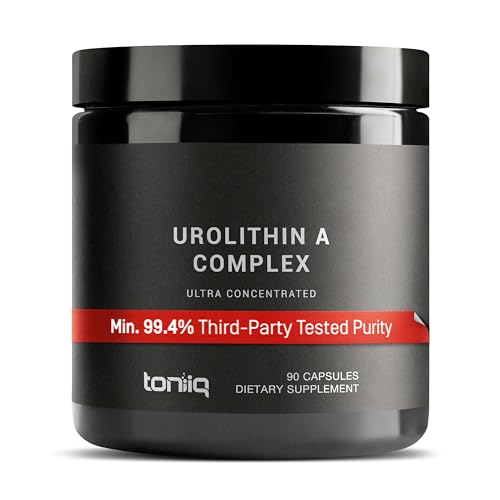
Not all urolithin A products are equivalent. The form used in the majority of published human trials is a synthesized, standardized ingredient (most commonly Mitopure, developed by Amazentis) which delivers a precise, consistent dose regardless of a person’s microbiome composition. Products relying on pomegranate extract or whole-food concentrates provide precursor compounds rather than urolithin A itself, and conversion rates are highly variable between individuals.
Clinical trials have typically studied doses in the range of 500 mg to 1,000 mg of urolithin A per day. When evaluating any supplement, look for products that specify the urolithin A content directly (not merely a fruit extract), reference the form used in published research, and carry independent third-party quality certification. Both powder and capsule formulations appear to have acceptable bioavailability based on available data.
Urolithin A is not a fast-acting stimulant. Its mechanism, stimulating mitochondrial renewal at the cellular level, operates gradually over weeks to months. Human trials have run from four weeks to four months, with mixed results on strength and endurance [3][2][14]. Expecting acute performance effects is likely to lead to disappointment.
🛒 Where to Buy Urolithin A

- Timeline Mitopure SoftgelsClinically studied
softgels, 500 mg/day: The clinically studied form (Amazentis); used in the human trials. - Pure Encapsulations Renual
caplique capsules, 250 mg Mitopure Urolithin A/serving (with resveratrol + CoQ10): adds resveratrol and CoQ10, a combination the published urolithin A trials did not test. - ProHealth Longevity Urolithin A
capsules, 500 mg: Longevity-focused brand, often higher dose. - Double Wood Urolithin A
capsules, 250-500 mg: Budget-friendly, widely available, COA on request.
As an Amazon Associate we earn from qualifying purchases. Prices and availability vary; verify dose and third-party testing before buying.
A Note on the Evidence
The human trial evidence for urolithin A and muscle health is promising but early-stage: most studies have been short-term, conducted in specific populations, and some have been affiliated with companies that develop urolithin A ingredients. Urolithin A is not a treatment for any medical condition, and nothing in this article constitutes medical advice; consult a qualified healthcare professional before supplementing, particularly if you have an existing health condition or take any medications.
Frequently Asked Questions
Does urolithin A actually improve muscle strength in humans?
A randomized trial in middle-aged adults missed its primary endpoint, with hamstring strength, a secondary measure, higher than on placebo [3], and a separate trial in older adults also missed its primary endpoints, with muscle endurance a secondary gain [2]. The evidence is encouraging, but the overall body of human trials is still relatively small and most studies have been short in duration.
How does urolithin A support muscle at a cellular level?
Urolithin A is a characterized activator of mitophagy: the process by which cells selectively identify and recycle damaged mitochondria to make way for healthier ones. Foundational research demonstrated mitophagy induction, extended lifespan in C. elegans, and improved muscle function in rodents [1]. This cellular mechanism is considered the primary pathway through which urolithin A may support muscle quality over time.
Is urolithin A only useful for older or sedentary people?
Research has examined multiple populations. An 8-week randomized, double-blind, placebo-controlled trial specifically recruited trained male athletes performing resistance training and assessed muscle endurance, strength, inflammation, oxidative stress, and protein metabolism [4]. Whether the magnitude of benefit in fit, younger individuals matches that seen in aging or sedentary populations remains an open question requiring further study.
Why not just eat pomegranates instead of taking a supplement?
Pomegranates and certain other foods contain ellagitannins that gut bacteria can convert to urolithin A, but this conversion depends heavily on individual microbiome composition. Research suggests a meaningful proportion of people produce little to no urolithin A even after consuming pomegranate juice. A 2024 systematic review noted that direct supplementation with standardized urolithin A provides reliable circulating levels regardless of microbiome variation [7].

How long before urolithin A supplementation has a noticeable effect on muscle?
Human clinical trials reporting measurable changes in muscle endurance, strength, or mitochondrial biomarkers have generally run for at least four weeks, with several studies extending to multiple months. Because the mechanism involves gradual mitochondrial renewal rather than an acute stimulus, results are expected to emerge over time. Short trials of a week or two are unlikely to capture meaningful outcomes.
Is urolithin A safe to take?
Available human trials and a 2024 systematic review reported a favorable safety profile at doses used in clinical research [7]. However, long-term safety data beyond the durations studied remain limited, and independent replication across diverse populations is still accumulating. Individuals with chronic health conditions, those taking medications, and pregnant or breastfeeding individuals should consult a healthcare provider before beginning supplementation.
References
- Ryu D et al. Urolithin A induces mitophagy and prolongs lifespan in C. elegans and increases muscle function in rodents. Nature medicine (2016). PMID 27400265
- Liu S et al. Effect of Urolithin A Supplementation on Muscle Endurance and Mitochondrial Health in Older Adults: A Randomized Clinical Trial. JAMA network open (2022). PMID 35050355
- Singh A et al. Urolithin A improves muscle strength, exercise performance, and biomarkers of mitochondrial health in a randomized trial in middle-aged adults. Cell reports. Medicine (2022). PMID 35584623
- Zhao H et al. Assessment of Urolithin A effects on muscle endurance, strength, inflammation, oxidative stress, and protein metabolism in male athletes with resistance training: an 8-week randomized, double-blind, placebo-controlled study. Journal of the International Society of Sports Nutrition (2024). PMID 39487653
- Dao T et al. Sarcopenia and Muscle Aging: A Brief Overview. Endocrinology and metabolism (Seoul, Korea) (2020). PMID 33397034
- Broome SC et al. Mitochondria as Nutritional Targets to Maintain Muscle Health and Physical Function During Ageing. Sports medicine (Auckland, N.Z.) (2024). PMID 39060742
- Kuerec AH et al. Targeting aging with urolithin A in humans: A systematic review. Ageing research reviews (2024). PMID 39002645
- Zhu H et al. Urolithin A Ameliorates Athletic Ability and Intestinal Microbiota in Sleep Deprivation from the Perspective of the Gut-Muscle Axis. Molecular nutrition & food research (2024). PMID 38468112
- Pierre A et al. Sepsis Induces Long-Term Muscle and Mitochondrial Dysfunction due to Autophagy Disruption Amenable by Urolithin A. Journal of cachexia, sarcopenia and muscle (2025). PMID 40817441
- Park SH et al. A Natural Autophagy Activator Castanea crenata Flower Alleviates Skeletal Muscle Ageing. Journal of cachexia, sarcopenia and muscle (2025). PMID 39873130
- Gao Z et al. Urolithin A protects against acetaminophen-induced liver injury in mice via sustained activation of Nrf2. International journal of biological sciences (2022). PMID 35342347
- Whitfield J et al. Evaluating the Impact of Urolithin A Supplementation on Running Performance, Recovery, and Mitochondrial Biomarkers in Highly Trained Male Distance Runners. Sports medicine (Auckland, N.Z.) (2025). PMID 40839339
- Andreux PA et al. The mitophagy activator urolithin A is safe and induces a molecular signature of improved mitochondrial and cellular health in humans. Nature metabolism (2019). PMID 32694802
- Denk D et al. Effect of the mitophagy inducer urolithin A on age-related immune decline: a randomized, placebo-controlled trial. Nature aging (2025). PMID 41174221
These statements have not been evaluated by the Food and Drug Administration. This information is not intended to diagnose, treat, cure, or prevent any disease. Content is for informational purposes only and is not medical advice; consult a qualified healthcare provider before starting any supplement. As an Amazon Associate we earn from qualifying purchases.